


Choosing paper comes down to four questions: What medium are you using? How much does the artwork need to last? What texture do you want? And what can you afford? Get these right, and you'll find papers that work beautifully. Get them wrong, and you'll fight your materials.

Paper & Boards Purchase Guide
You spend hours on a watercolor painting. The colors are perfect, the composition works. Six months later, it's yellowing. The paper is getting brittle. That cheap pad from the discount store is eating your artwork from the inside out—acid degradation, and there's nothing you can do about it now.
Paper isn't just a surface to put marks on. It's a structural component of your finished artwork. The fibers, the sizing, the texture, the pH level—all of these affect how your media behaves while you work and whether your art survives the next decade. Understanding paper is understanding what makes art last. This guide covers everything from quick sketches on newsprint to museum-quality cotton sheets that will outlive you.
The Paper Is Part of the Art: Every paper has character. Rough surfaces catch charcoal and pastel in their valleys, creating texture. Smooth surfaces let ink flow cleanly and show every detail. Hot press watercolor paper gives you crisp edges and smooth gradients; rough paper breaks your washes into sparkling fragments. The paper you choose isn't neutral—it participates in every mark you make.
What's in This Guide
How to Think About Paper
What Paper Is Made Of (And Why It Matters)
Paper fiber determines everything about how long your artwork lasts. This is the single most important factor for finished work.
100% Cotton (Museum Quality): The gold standard. Cotton fibers are naturally acid-free, incredibly stable, and will last centuries under proper conditions. Papers like Arches, Fabriano Artistico, and Legion Stonehenge use 100% cotton. These cost more, but for finished artwork, they're worth it.
Cotton/Wood Blend (Artist Quality): Papers like Strathmore 400 Series mix cotton with purified wood pulp. Still acid-free, good stability, significantly less expensive. Excellent for serious work that doesn't need museum-level permanence.
Wood Pulp (Student Grade): Strathmore 300 Series, Canson Foundation, most inexpensive pads. Variable pH, may yellow over time. Fine for practice, studies, and experimental work you don't need to keep.
Recycled Content: Brands like Legion Eco and New Leaf. Usually acid-free, variable quality. Good for environmentally conscious work that doesn't require the longest archival life.
Fiber Types at a Glance
| What It's Made Of | Quality Level | Will It Last? | Best For | Brands to Know |
|---|---|---|---|---|
| 100% Cotton | Museum Quality | Centuries with proper care | Finished watercolor, printmaking, any work you want to preserve | Arches, Fabriano Artistico, Legion Stonehenge |
| Cotton/Wood Blend | Artist Quality | Decades, acid-free | Drawing, mixed media, work that matters but isn't museum-bound | Strathmore 400, Canson XL, Bee Paper |
| Wood Pulp Only | Student Grade | May yellow over time | Practice, studies, experimental work | Strathmore 300, Canson Foundation |
| Recycled Content | Eco-Friendly | Usually acid-free, varies | Environmentally conscious projects, studies | Legion Eco, Canson XL Recycled |
Paper Weight: What the Numbers Mean
Paper weight tells you how thick and sturdy the paper is—and whether it will buckle when wet. You'll see weight in pounds (lb) or grams per square meter (gsm). Higher numbers mean heavier, thicker paper.
Lightweight (70-90 gsm / 50-60 lb): Sketching, gesture drawing, overlays, practice work. This paper buckles immediately with wet media. Newsprint falls in this range—cheap, disposable, perfect for loosening up.
Medium Weight (140-200 gsm / 90-140 lb): Drawing, light watercolor washes, mixed media. The sweet spot for most dry media work. Can handle light wet applications with stretching.
Heavy Weight (300-400 gsm / 140-300 lb): Watercolor, gouache, wet media. 300 gsm (140 lb) is the standard for watercolor work—heavy enough to resist buckling with proper technique.
Extra Heavy (500+ gsm / 300+ lb): Essentially board-weight. No stretching required. Handles anything you throw at it. Significantly more expensive, but the convenience may be worth it.
Surface Texture: Hot Press, Cold Press, and Rough
Surface texture (also called "tooth") determines how media sits on the paper. This is largely a matter of preference, but certain textures work better with certain techniques.
Hot Press (Smooth): Paper pressed with heated rollers, creating a smooth, almost slick surface. Excellent for fine detail, pen and ink, smooth washes, botanical illustration, technical drawing. Ink flows cleanly; graphite glides. Less forgiving of mistakes—every mark shows.
Cold Press (Medium Texture): Pressed without heat, leaving moderate texture. The most versatile surface. Good tooth for dry media, enough smoothness for detail work. This is where most artists start and many stay. If you're unsure, cold press is usually the safe choice.
Rough: Heavy texture with pronounced peaks and valleys. Dry brush techniques create broken, sparkling effects as pigment catches only the peaks. Charcoal and pastel grab beautifully. Detail work is difficult. Excellent for expressive, atmospheric work.
Plate Finish: Ultra-smooth, achieved through calendering (running paper through heavy steel rollers). Used for lithography, precise illustration, airbrush work. Very specialized.
💡 Pro Tip:
Test Before You Commit: Art stores sell single sheets of most papers. Buy one sheet each of several papers you're considering. Make actual work on them—not just test swatches. See how erasure affects the surface, how wet media behaves, how your specific pencils or brushes feel. An hour of testing saves months of working on the wrong surface.
Paper Types by Application
Now that you understand what makes paper work, here's how to choose paper for specific applications.
Watercolor Paper (Where Quality Really Matters)
Watercolor paper is engineered for water. It needs to absorb wet paint, allow you to manipulate it, handle repeated wetting without falling apart, and dry flat. Cheap watercolor paper does none of these well.
The Major Manufacturers
Arches: French mould-made, 100% cotton. The benchmark against which other papers are measured. Excellent wet strength, beautiful texture, predictable behavior. Expensive, but many professionals consider it essential.
Fabriano Artistico: Italian tradition, 100% cotton. Slightly less expensive than Arches with comparable quality. Some artists prefer its texture and how it handles lifting.
Saunders Waterford: British heritage, 100% cotton. Distinctive texture, traditional cylinder-mould made. Handles washes beautifully.
Legion Stonehenge Aqua: American-made, 100% cotton. Excellent value in the premium segment. Very smooth hot press option.
Canson Heritage: 100% cotton, cylinder-mould made. Good mid-range professional option.
Understanding Sizing
Sizing is the secret ingredient that makes watercolor paper work. It's a substance (traditionally gelatin, now often synthetic) applied to control how paper absorbs water. Heavily sized paper keeps paint on the surface longer, giving you more working time and brighter colors. Lightly sized paper absorbs more quickly—good for soft effects, harder for beginners.
Papers are sized internally (added to the pulp), externally (surface-coated), or both. External sizing affects how paint handles; internal sizing affects structural stability. Stretching paper removes some surface sizing, which changes how it paints—something to consider if you notice your stretched paper behaves differently.
Which Surface for Which Technique
Hot Press: Botanical illustration, portraits, architectural rendering, smooth washes, detailed work. Paint sits on the surface; lifting is easier.
Cold Press: General watercolor, landscapes, portraits, controlled texture. The most forgiving and versatile.
Rough: Expressive landscapes, atmospheric effects, dry brush techniques. The texture becomes part of the painting.
Watercolor Paper Weight Guide
The heavier the paper, the less it buckles—but heavier also costs more.
| Weight (lb) | Weight (gsm) | Buckling | Good For | Do You Need to Stretch It? |
|---|---|---|---|---|
| 90 lb | 190 gsm | Significant | Studies, light washes only | Yes, always |
| 140 lb | 300 gsm | Moderate | General watercolor, most techniques | Recommended for wet work |
| 300 lb | 640 gsm | Minimal | Heavy wet-on-wet, multiple washes | Usually not |
| 400+ lb | 850+ gsm | Almost none | Anything—essentially board weight | No |
How to Stretch Watercolor Paper
Stretching keeps paper flat while you paint. Wet paper expands; if it's free to buckle, it will—and paint pools in the valleys. Stretching holds the paper under tension so it can't buckle.
The Traditional Method
What You Need: A rigid board (plywood, MDF, Gator board), brown gummed tape (the kind you wet to activate—not masking tape), a tray of clean water, and patience.
The Process: Soak the paper in clean water. Time depends on weight—about 3 minutes for 140 lb, 5-10 minutes for heavier weights. Lay the wet paper on your board. Cut strips of gummed tape, wet them briefly (don't soak off the adhesive), and tape all four edges, overlapping the paper by about half an inch. Let dry completely flat—overnight is best. The paper shrinks as it dries, creating tension that keeps it flat when you paint.
Some artists add staples through the tape for extra security. Others use a staple gun alone, without tape. Either works.
Alternatives to Stretching
Watercolor Blocks: Paper glued on all four edges. Paint directly on the block; the glue holds the paper flat. Cut the finished painting free with a palette knife. More expensive per sheet, but no stretching required.
Heavy Paper: 300 lb (640 gsm) and heavier papers resist buckling enough that many artists skip stretching entirely. If you hate stretching, this is the solution—just buy heavier paper.
Paper Stretcher Frames: Commercial products that grip wet paper edges and hold tension as it dries. Ken Bromley and others make various designs. More convenient than tape, reusable.
Accept the Buckle: Some artists don't stretch at all. They let the paper buckle, finish the painting, and flatten it afterward under weights or by carefully dampening the back and drying flat. This works, but the buckling during painting can be frustrating.
Drawing and Sketching Paper
Drawing paper needs enough texture ("tooth") to grab graphite, charcoal, or pastel particles, but enough smoothness to allow detail work and blending. The balance depends on your medium and style.
Workhorse Drawing Papers
Strathmore 400 Series: The standard against which drawing papers are compared. Medium surface, excellent for graphite and charcoal, acid-free, good value. This is what most art schools recommend.
Canson XL Series: Versatile texture, slightly toothier than Strathmore 400. Excellent value. The recycled version works well for practice.
Legion Stonehenge: 100% cotton, smooth finish, archival quality. A step up for finished work. Beautiful with colored pencil and graphite alike. Comes in white and several toned colors.
Bristol Paper: Smooth vs Vellum
Bristol is thick, sturdy paper made by pasting multiple sheets together. It comes in two distinct surfaces:
Bristol Smooth (Plate): Ultra-smooth, almost no tooth. Excellent for pen and ink, markers, airbrush, and technical illustration. Lines stay crisp. Not ideal for graphite—pencil tends to slide rather than grab.
Bristol Vellum: Has noticeable texture (tooth). Better for graphite, colored pencil, charcoal, and pastel. Can take more erasing without damage. Strathmore 400 Series Bristol Vellum is the industry standard.
The two surfaces are completely different—don't assume Bristol is Bristol. Check the label.
Specialty Drawing Surfaces
Charcoal Paper (Canson Mi-Teintes, Strathmore Charcoal): Laid texture (parallel lines) that grabs charcoal and pastel beautifully. Available in many colors.
Toned Paper (Strathmore Toned Gray, Toned Tan): Pre-colored mid-tone paper for working with both highlights (white charcoal, white pencil) and shadows. Changes how you approach value.
Newsprint: Cheap, impermanent, perfect for gesture drawing and practice. Your loose work often happens on newsprint because you're not precious about it.
⚠️ Important:
Acid Destroys Art (Slowly): Paper with acid content yellows, becomes brittle, and eventually crumbles. This takes years, not days—but it's irreversible. For any artwork you might want to sell, gift, or keep, use acid-free paper. Look for "acid-free" or "pH neutral" on the label. Papers with lignin (wood pulp component) are particularly prone to degradation. For finished work, 100% cotton is the safest choice.
Mixed Media Paper (When You Want Options)
Mixed media paper attempts to handle both wet and dry applications—a genuine compromise. It won't perform as well as dedicated watercolor paper with heavy washes, or as well as bristol with fine pen work. But for work that combines techniques, it's often the practical choice.
Mixed Media Options
Strathmore 400/500 Series Mixed Media: Vellum surface, handles light watercolor and acrylic along with drawing media. The 500 Series uses better fiber for improved longevity.
Canson XL Mixed Media: Affordable, medium texture, popular for practice and experimentation. Won't handle heavy wet applications but works for light washes combined with dry media.
Fabriano Mixed Media: Cotton content, more professional quality. Better wet strength than the student-grade options.
Synthetic Papers
Yupo: 100% polypropylene (plastic). Water sits on the surface and can be manipulated almost indefinitely. Unique effects impossible on traditional paper. Challenging to learn, but distinctive results. Also excellent for alcohol ink.
Legion Aquarius II: Cotton/synthetic blend engineered to resist buckling without stretching. A practical choice when you want watercolor paper behavior without the stretching hassle.
Specialty Papers
Pastel Papers: Canson Mi-Teintes, Strathmore 400 Series Pastel, Uart. These have significant tooth to hold multiple layers of pastel. Sanded papers (like Uart) hold even more.
Printmaking Papers: Rives BFK, Arches Cover, Stonehenge. Heavyweight 100% cotton, soft and absorbent, designed for printmaking but excellent for drawing and some painting applications.
Marker Paper: Very smooth, very thin, with a coating that prevents marker bleed-through. Semi-transparent for tracing. Canson XL Marker, Borden & Riley #37.
Illustration Boards and Art Panels
Illustration board is paper permanently mounted to rigid backing. You get a sturdy, flat surface that won't buckle, warp, or need stretching. The tradeoff: you can only use one side, and it's heavier and more expensive than paper alone.
Traditional Illustration Boards
Strathmore 500 Series Illustration Board: Museum board backing, acid-free, available in hot press (smooth) and cold press surfaces. The professional standard for commercial illustration.
Crescent Illustration Board: 100% cotton surface on professional backing. Multiple surface options.
Bainbridge Board: Various surface options including their clay-coated board with unique working properties.
Specialty Art Panels (Ampersand and Others)
Ampersand makes museum-quality panels with specialized surfaces:
Aquabord: Clay-coated surface specifically designed for watercolor. Allows lifting, scrubbing, and reworking impossible on paper. Unique luminosity. Takes some adjustment—paint behaves differently than on paper.
Claybord: Ultra-smooth white clay surface. Excellent for detailed illustration, egg tempera, and scratchboard techniques.
Pastelbord: Sanded surface that holds pastel layers beautifully. No need for fixative between layers.
Scratchbord: Black India ink over white clay. Scratch through the black to reveal white beneath. A technique that rewards precision.
Gessobord: Acrylic gesso surface on hardboard. Ready-to-paint alternative to primed canvas. Available in various textures.
Canvas Boards
Fredrix Canvas Panels, Masterpiece Canvas Panels: Canvas glued to cardboard backing. An economical way to practice on canvas texture without the expense of stretched canvas. Not archival—for studies and practice, not finished work you plan to sell.
Display and Mounting Boards
Display boards serve two purposes: presenting work and protecting it. For framing, the board touching your artwork must be archival quality, or it will damage the art over time.
Museum and Conservation Boards
For framing artwork you want to last, museum board is non-negotiable. Regular mat board contains acids that will migrate into your artwork and cause foxing (brown spots) and deterioration.
Crescent Museum Board: 100% cotton, pH neutral, conservation quality. Available in various thicknesses and colors.
Bainbridge Alphamat: Cotton fiber, conservation quality. Excellent for matting valuable work.
Rising Museum Board: Archival quality, available in multiple plies.
When framing anything you care about preserving, every component touching the artwork should be archival: the mat, the backing board, and the hinging materials.
General Display Boards
Foam Core (Foamboard): Polystyrene foam sandwiched between paper. Lightweight, rigid, easy to cut. Not archival—for temporary display, presentations, and mockups. Elmer's, Bienfang, and others make various thicknesses.
Mat Board (Standard): For decorative matting where archival quality isn't critical. Comes in hundreds of colors and textures. Crescent and Bainbridge dominate the market.
Poster Board: Thin, colored board for presentations and signage. Royal Brites, Pacon. Not archival.
Corrugated Board: Cardboard. For shipping, temporary signage, and applications where permanence doesn't matter.
Mounting Options
How you attach artwork to backing matters for longevity. For archival mounting: use acid-free hinges (Japanese paper with wheat paste) at the top edge only, allowing the artwork to hang freely. Dry mounting (heat-activated adhesive) is permanent and not reversible—fine for reproduction prints, not for original art or valuable prints.
Sustainable Paper Choices
Quality paper is already sustainable—a single good sheet beats ten cheap ones you'll throw away. Beyond that: FSC-certified papers come from responsibly managed forests. Recycled papers (Legion Eco, some Canson lines) work well for many applications. Hemp and bamboo papers offer alternatives to cotton with faster-growing plants. Use both sides of practice paper, save scraps for small projects, and buy the size you need rather than trimming larger sheets.
How Paper Is Made (And Why It Affects Your Work)
Manufacturing method affects paper character more than most artists realize. The same fiber content made different ways produces different papers.
Handmade: Individual sheets formed by dipping a mould into a vat of pulp. Each sheet is unique. Irregular deckle edges, variation in thickness, occasional imperfections. The most expensive option, primarily for printmakers and those who value the aesthetic. Twinrocker, Two Rivers, and various small mills produce handmade papers.
Mould-Made: A cylinder mould rotates through pulp, creating paper with characteristics similar to handmade but more consistent. Natural deckle edges on two sides. This is how premium watercolor papers (Arches, Fabriano Artistico, Saunders Waterford) are made. The slow process allows fibers to settle naturally, creating strength and stability.
Machine-Made: Paper formed on a continuous belt (Fourdrinier machine). Fast, consistent, cost-effective. Most drawing papers and student-grade materials are machine-made. Quality can be excellent, but the paper lacks the fiber orientation that gives mould-made papers their character.
The practical difference: mould-made papers generally have more dimensional stability (resist buckling better), handle repeated wetting better, and have a certain "feel" that many artists prefer. But plenty of excellent work is made on machine-made papers.
Paper Color and Why It Matters
Paper color affects how your artwork looks more than you might think. White paper reflects light back through transparent media; toned paper provides a mid-value ground that changes how you approach value.
Bright White: Maximum light reflection. Makes watercolors luminous, inks sharp, photos pop. Can be harsh for some drawing applications. Most watercolor papers come in bright white.
Natural White / Soft White: Slightly warmer, less stark. Easier on the eyes for long drawing sessions. Many drawing papers default to this. Better for portraits and some mixed media work.
Cream / Off-White / Antique: Warm tone that reduces contrast. Traditional feel. Popular for graphite and charcoal work. Can make work feel more "classical."
Toned Gray / Toned Tan: Mid-value papers that let you work in both directions—adding darks AND lights. Changes your whole approach to value. Strathmore Toned series, Canson Mi-Teintes, Stonehenge colors. For charcoal, pastel, and colored pencil artists who want to use white highlights.
For archival concerns: natural or cream papers are often more stable than optically brightened bright whites, which can yellow over time as the brighteners break down. This is mostly a concern with cheaper papers—quality bright whites use stable brighteners.
Paper Color Options
| Color | Character | Works Well With | Best Applications |
|---|---|---|---|
| Bright White | Maximum luminosity, can be harsh | Watercolor, ink, photography | High contrast work, reproduction, transparent media |
| Natural White | Softer, warmer, easier on the eyes | Drawing, mixed media, portraits | General artwork, long drawing sessions |
| Cream / Off-White | Warm, traditional feel | Charcoal, graphite, ink | Classical drawing, studies, softer look |
| Toned Gray or Tan | Mid-value ground, work both directions | Charcoal, pastels, colored pencil | Three-value studies, portraits with highlights |
Paper Sizes and Formats
Paper comes in sheets, pads, blocks, and rolls. Each format has its uses.
Standard Sheet Sizes
Letter/A4 (8.5×11" / 210×297mm): Convenient, portable, fits in standard portfolios and frames.
Tabloid/A3 (11×17" / 297×420mm): Good working size for detailed drawings. Still portable.
Full Sheet (22×30"): Standard watercolor paper size. Many papers are priced and sold in this dimension. You can cut it to your preferred working size.
Double Elephant (26×40"): Large format for exhibition-scale work. Available in premium papers.
Pads, Blocks, and Rolls
Spiral Pads: Convenient for sketching, easy to flip pages. Paper may not lie flat for wet media.
Tape-Bound Pads: Pages remove cleanly. Good for finished work on individual sheets.
Watercolor Blocks: Sheets glued together on all four edges. Paint directly on the block—the glue holds the paper flat, eliminating stretching. Cut the finished painting free with a palette knife. More expensive than loose sheets but incredibly convenient.
Rolls: For large work or cutting custom sizes. More economical per square inch than sheets. Arches, Fabriano, and others sell watercolor paper in rolls.
Buy the format that matches your workflow. If you hate stretching paper, watercolor blocks or heavy (300 lb) sheets may be worth the premium.
Scanning and Digital Integration
If you scan or photograph your work for reproduction, prints, or digital portfolios, paper choice affects results.
For Clean Scanning: Smooth papers scan with less texture interference. Hot press watercolor paper and Bristol smooth reproduce most faithfully. Rough papers show their texture prominently in scans—sometimes desirable, sometimes not.
Inkjet Printing on Art Paper: Some artists create digital works for printing on traditional art paper. Papers must be coated to accept inkjet ink properly. Hahnemühle, Canson Infinity, Epson, and others make fine art inkjet papers in cotton rag and alpha-cellulose. These are different products from traditional art papers—designed specifically for digital printing.
Hybrid Workflows: Many contemporary artists work traditionally, scan, manipulate digitally, and print on fine art paper. Understanding both traditional paper properties and digital printing papers expands your options.
If reproduction quality matters, consider paper color (bright white reproduces with more contrast), surface texture (how much texture do you want visible?), and fiber content (cotton papers generally hold up better to post-processing than wood pulp).
Specialty and Technical Papers
Some applications require papers with specific characteristics beyond standard art papers.
Tracing Paper and Vellum: Translucent papers for overlays, transferring designs, and architectural work. Canson Tracing, Clearprint. "Vellum" in this context means translucent drafting film, not Bristol vellum (which is opaque textured drawing paper)—confusingly, the same word means completely different things.
Graph and Grid Papers: Pre-printed grids for technical drawing, planning, perspective construction. Useful for artists who need accurate proportions or perspective frameworks.
Transfer Papers: Graphite-coated papers for transferring drawings. Saral makes reusable transfer paper that works better than homemade graphite sheets.
Kraft Paper: Brown paper for packing, but also used by some artists for studies and certain aesthetics. Inexpensive. Not archival.
Rice Paper (Xuan Paper): Thin, absorbent papers for Asian brush painting and calligraphy. Very different behavior from Western papers—ink spreads and feathers intentionally. Requires specific techniques.
Tissue and Mulberry Papers: Thin, strong papers used in collage, bookbinding, and conservation. Japanese papers like kozo, gampi, and mitsumata have specific properties for different applications.
Storing Paper Properly
Paper is more fragile than it looks. Improper storage degrades it before you ever use it.
Keep It Flat: Store paper horizontally, not rolled or standing. Weight on top (more paper, flat boards) helps prevent curl. Rolled paper develops memory and fights to stay curved.
Control Humidity: Paper absorbs moisture from the air. High humidity causes cockling and can promote mold. Low humidity makes paper brittle. Aim for moderate, stable conditions—normal indoor climate is usually fine.
Avoid Light: Direct sunlight and fluorescent lights cause paper to yellow and become brittle over time. Store in closed drawers, portfolios, or at minimum away from windows.
Protect from Contamination: Keep paper wrapped or covered. Dust embeds in the surface and shows up when you paint. Oils from hands transfer to paper and resist watercolor. Handle paper by the edges or use clean hands.
Separate Different Papers: Acidic papers can transfer acids to archival papers stored against them. If you have a mix of student and professional papers, don't interleave them. Keep archival paper in its own portfolio or drawer.
Before You Buy in Bulk: Paper responds differently to different hands and different media. Before committing to a pad or ream, buy single sheets and test them with your actual materials and techniques. What works brilliantly for one artist may frustrate another. The small investment in testing saves the larger regret of a stack of paper you don't enjoy using.
Frequently Asked Questions
What's the real difference between cotton and wood pulp paper?
Cotton fibers are naturally longer, stronger, and more stable than wood pulp fibers. 100% cotton paper handles wet media better (doesn't fall apart when soaked), erases more cleanly, ages without yellowing, and generally feels more pleasant to work on. Wood pulp paper works fine for practice and studies, but for finished work or anything you want to keep, cotton is worth the investment. The price difference reflects a real quality difference.
Do I really need to stretch watercolor paper?
It depends on the paper weight and how wet you work. 140 lb (300 gsm) paper will buckle with wet washes unless stretched. 300 lb (640 gsm) paper usually lies flat without stretching. Watercolor blocks hold paper flat while you paint, eliminating the need to stretch. If you hate stretching, either use heavier paper, work on blocks, or accept some buckling and flatten the finished piece later under weights.
How do I stretch watercolor paper?
The traditional method: soak the paper in clean water (3-10 minutes depending on weight), lay it on a rigid board, and tape down all four edges with brown gummed tape (the kind you wet to activate). Let it dry completely flat—overnight is best. The paper shrinks as it dries, creating tension that keeps it flat when wet again. Staples work too, and some artists use stretcher bars like canvas. The key is securing the edges while the paper is wet and expanded, then letting it dry under tension.
What's the difference between Bristol smooth and Bristol vellum?
These are completely different surfaces despite sharing the Bristol name. Bristol Smooth (or Plate) is ultra-smooth with almost no texture—excellent for pen and ink, markers, and airbrush. Bristol Vellum has noticeable tooth—better for graphite, colored pencil, charcoal. They're not interchangeable. Check the label carefully.
Is expensive paper worth it for beginners?
Yes and no. You don't need Arches to learn watercolor—that's wasteful. But you do need paper that works properly. Strathmore 400 Series and Canson XL are good quality at reasonable prices. Cheap dollar-store paper will frustrate you: colors look dull, washes are uneven, erasing damages the surface. Buy good student-grade paper, not bottom-shelf paper or premium professional paper. As your skills develop, upgrade gradually.
What paper should I use for colored pencils?
Colored pencil needs enough tooth to grab pigment but not so much that you can't build smooth layers. Legion Stonehenge is the classic choice—smooth 100% cotton with just enough tooth. Bristol Vellum works well. Strathmore 400 Drawing is a good economical option. For very heavy layering and burnishing, some artists use sanded papers (like Uart) that hold much more pigment.
How do I know if paper is acid-free?
Check the label—manufacturers clearly mark acid-free papers because it's a selling point. If it doesn't say acid-free, assume it isn't. "Archival" and "museum quality" also indicate acid-free paper. For finished work, especially anything you plan to sell or keep, always use acid-free paper. The degradation from acidic paper is slow but irreversible.
Can I use watercolor paper for other media?
Absolutely. Quality watercolor paper makes an excellent surface for gouache, ink, some acrylic techniques, and even dry media if you like the texture. Cold press watercolor paper works beautifully with charcoal and pastel. Hot press can be excellent for detailed pen and ink work. The paper is engineered to be durable and handle abuse—that translates to many applications beyond watercolor.
What's sizing, and why does it matter?
Sizing is a substance (traditionally gelatin, now often synthetic) that controls how paper absorbs water. Heavily sized paper keeps paint on the surface longer—you have more time to manipulate washes, colors stay brighter, lifting is easier. Lightly sized paper absorbs quickly—softer edges, faster drying, harder to lift mistakes. Neither is better; they're different. If your paper behaves unexpectedly, sizing may be the variable.
Block, pad, sheets, or roll—which format should I buy?
Watercolor blocks are glued on all edges so paper stays flat while you paint—convenient, no stretching required, more expensive per sheet. Tape-bound pads let you remove individual sheets cleanly. Spiral pads are good for sketching but sheets don't lie flat. Loose sheets let you buy exactly what you need and cut to custom sizes. Rolls are most economical for large quantities. Match the format to how you work.
Understanding Paper Surfaces
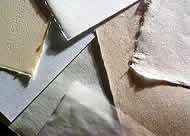
Rough Paper has pronounced peaks and valleys that catch dry media beautifully. Charcoal settles in the valleys; the peaks stay light. Dry brush watercolor skips across the surface, leaving sparkle. Arches Rough and Fabriano Artistico Rough are the standards. Not for detail work—the texture fights you.
Hot Press means the paper was pressed with heated rollers, flattening the fibers into a smooth surface. Ink flows cleanly, washes dry evenly, details stay sharp. Arches and Fabriano both make excellent hot press papers. Botanical illustrators and technical artists often prefer this surface.
Cold Press (also called "NOT" in Britain—meaning "not hot pressed") offers moderate texture. It's the most versatile surface—enough tooth for dry media, smooth enough for reasonable detail. Saunders Waterford and most Arches and Fabriano papers are available in cold press. When in doubt, start here.
100% Cotton matters for longevity and handling. Cotton fibers don't contain the lignin that causes wood pulp to yellow. They hold up to repeated wetting, scrubbing, and erasing. Arches, Fabriano Artistico, Stonehenge—all 100% cotton. For finished work, this is the standard.
Shop Paper-And-Boards Supplies
Professional paper-and-boards supplies for every application
300 Series Bristol
by Strathmore

8
Versions of this item
From: $8.13
Peacock Railroad Board
by Pacon

11
Versions of this item
From: $0.62
Stonehenge Paper
by Legion Paper

15
Versions of this item
From: $4.32
400 Series Drawing Paper Pad
by Strathmore

8
Versions of this item
From: $2.70
Sulphite Construction Paper
by Tru-Ray

35
Versions of this item
From: $3.51
Series 400 Sketch Pads
by Strathmore

6
Versions of this item
From: $7.38
1 5/8 in. Cradled Wood Painting Panels
by American Easel

18
Versions of this item
From: $7.30
Artagain Recycled Papers
by Strathmore

8
Versions of this item
From: $1.83


