


Before you buy anything, answer three questions: How much space do you have? What kind of art do you make? How many hours will you spend at this workspace? Your answers determine everything else.

Furniture Purchase Guide
Three hours into a drawing session, your back hurts, your neck is stiff, and you're hunching over a kitchen table that's the wrong height while squinting under a lamp that throws shadows across everything you're trying to see. Sound familiar? Most artists start this way. And most artists eventually realize that fighting their furniture is stealing energy that should go into their work.
Studio furniture isn't about luxury—it's about not destroying your body while you create. A proper drawing table at the right angle, a chair that actually supports you, lighting that shows true colors, storage that keeps supplies within reach instead of scattered across the floor. These things compound over years of practice. The right setup doesn't just feel better; it makes better work possible.
The Long Game: Quality studio furniture lasts 20-30 years. That $400 drawing table costs about $15 per year over its lifetime. The $150 table you'll replace three times costs more and works worse. Think decades, not this month's budget.
What's in This Guide
Figuring Out What You Actually Need
Start With Your Space (Be Realistic)
A 48-inch professional drafting table won't fit in a corner of your bedroom, no matter how much you want it. Measure your space first, then shop. Leave room to step back from your work, access storage, and actually move around.
What Fits in Your Space
Be realistic about what your square footage can handle
| Your Space | Square Feet | What You Can Fit | Storage Options | Brands That Work |
|---|---|---|---|---|
| Corner of a room | 25-50 sq ft | Compact table, stool, wall-mounted storage only | Go vertical—wall shelves, pegboard, nothing on the floor | Artograph Futura, Studio Designs |
| Spare room | 80-150 sq ft | Adjustable table, real task chair, one storage unit | Rolling cart, one bookshelf or storage unit | Mayline Vision, Alvin WorkMaster |
| Dedicated studio | 200-400 sq ft | Professional table, ergonomic seating, multiple storage pieces | Flat files, supply cabinet, display space | Hamilton Industries, Safco |
| Commercial space | 500+ sq ft | Multiple workstations, specialized equipment | Industrial storage, mobile systems, room to breathe | Mayline Ranger, Hamilton Vintage |
Ergonomics (What Your Body Needs)
Good ergonomics isn't complicated—it's just furniture that fits your body doing what you actually do.
Table height: 28-30 inches for seated work, 36-42 inches for standing. Ideally, adjustable so you can switch. If you draw, you want a tilting surface—flat tables force you to hunch over.
Seat height: Your feet should be flat on the floor, thighs roughly parallel to the ground. If your table is high, you need a chair or stool that goes high enough.
Back support: If you sit for hours, you need lumbar support. Period. Backless stools work for short sessions or when you need mobility, but not for all-day drawing marathons.
Lighting position: Task light should come from your non-dominant side (left side for right-handers). This prevents your hand from casting shadows on your work.
Match Furniture to What You Actually Do
Different art forms have different physical requirements. Be honest about how you work.
Drawing and illustration: You need a tilting surface—30-45 degrees is typical for drawing, steeper for inking. Flat tables strain your neck and back. Good task lighting is non-negotiable. Reference material storage nearby helps.
Painting: Most painters work at easels, not tables, so seating becomes simpler (often a stool). You need palette storage within reach, good ventilation if using solvents, and flooring that can handle spills.
Digital art: Monitor positioning matters as much as the drawing surface. Cable management prevents chaos. Many digital artists use convertible setups that switch between tablet work and monitor viewing.
Mixed media: You need flexible surfaces that can handle wet media, cutting, gluing—abuse, basically. Easy cleanup matters more than elegance. Lots of varied storage for different materials.
Frequently Asked Questions
What's the difference between a drafting table and an art table?
Drafting tables (Alvin WorkMaster, Mayline Vision) offer precise angle adjustment from 0-90 degrees, often with built-in rulers and parallel bars for technical drawing. Art tables (Studio Designs) focus on comfort for general artistic work with more moderate tilt angles and integrated storage. If you do technical drawing or need steep angles, get a drafting table. For general illustration and painting, either works.
Do I really need an ergonomic chair?
If you sit for more than an hour at a time, yes. Not because it's fancy—because your body will break down without support. You won't notice the damage immediately; it accumulates over months and years. A $200-400 ergonomic chair is much cheaper than physical therapy. The Alvin Prestige offers good support at a reasonable price; the Herman Miller Sayl is worth the premium if you can afford it.
How do I choose studio lighting?
Get daylight-balanced LEDs (5000K-6500K) with 90+ CRI for accurate color perception. Position your task light on your non-dominant side to avoid casting shadows with your hand. Daylight Company and Alvin Swing-Arm lamps are reliable choices. Combine task lighting with ambient room lighting—don't work in a dark room with just one bright spot.
What's the most useful storage furniture?
Depends on what you store. For large-format papers and finished work, flat files (Mayline, Safco) are essential. For supplies, rolling carts offer flexibility—Honey-Can-Do is affordable, Hamilton Taborets are professional-grade. The key is accessibility: things you use constantly should be within arm's reach.
Can I just use regular furniture?
You can, but you'll fight it constantly. Kitchen tables are the wrong height and don't tilt. Office chairs don't go high enough for drafting tables. Regular desk lamps have wrong color temperature. You can make do while starting out, but specialized art furniture exists because generic furniture doesn't work well for making art.
How much should I budget for a basic studio setup?
Entry level: $300-500 gets you a Studio Designs table, basic chair, and simple lighting—functional but you'll likely upgrade. Mid-range: $800-1500 for an Alvin WorkMaster, quality task chair, good lighting, and basic storage—this setup lasts years. Professional: $2000+ for premium Hamilton or Mayline systems that will outlive you.
I have a tiny space. What are my options?
Portable drawing boards (Alvin, Artograph) let you work on any table and store flat when not in use. Wall-mounted storage maximizes floor space. Compact tables like Artograph Futura or Studio Designs Futura work in corners. Consider standing-height setups that take less footprint than seated ones. It's harder but not impossible.
💡 Pro Tip:
Less Is More: A crowded studio with mediocre furniture is worse than a minimal setup with quality pieces. Three excellent items (good table, proper chair, real task lighting) beats a room full of cheap substitutes. Buy what you need, buy it once, buy it right.
The Core Furniture Categories
Let's walk through what actually matters, category by category.
Drawing Tables (The Foundation of Your Studio)
A proper drawing table does things a kitchen table never will: tilts to the angle you need, adjusts to the height you need, and provides a surface designed for the work.
The professional options:
Alvin WorkMaster: The workhorse. Heavy-duty steel, precise angle adjustment, built to last decades. Not pretty, but indestructible.
Mayline Vision: Contemporary design with integrated storage. Looks better in a home studio while still offering professional functionality.
Hamilton Vintage: Classic oak construction if you want traditional styling. These are heirloom pieces—your grandchildren could use them.
Studio Designs: Entry-level pricing with basic features. Good enough to learn on, but you'll likely upgrade eventually.
Portable options: If you can't commit to a full table, Alvin drawing boards provide professional surfaces you can set on any table. Artograph LightPad boards add illumination for tracing. Not as good as a real drawing table, but workable for tight spaces or budgets.
Quick Space Reference
| Space Type | Minimum Table Size | Maximum Table Size | Chair Type |
|---|---|---|---|
| Corner studio (25-50 sq ft) | 24"×36" portable board | 30"×42" compact table | Stool (saves space) |
| Spare room (80-150 sq ft) | 30"×42" | 37.5"×60" | Task chair with casters |
| Dedicated studio (200-400 sq ft) | 37.5"×60" | 42"×84" | Full drafting chair |
| Commercial (500+ sq ft) | Multiple 37.5"×60" stations | Custom configurations | Multiple seating types |
Seating (Where Most Artists Go Wrong)
Your chair matters more than your table. Seriously. You can work at a mediocre table; you can't work effectively in pain.
Types of seating:
Drafting chairs: Extended height range (24-34 inches seat height) for standing-height tables. Essential if your work surface is above standard desk height. Alvin Prestige and Safco Vue are solid options with real lumbar support.
Task chairs: Standard desk height with full ergonomic adjustability. Good for flat work surfaces. If you already have a quality office chair that fits you, it works fine for art too.
Stools: Backless, mobile, good for easel work or when you need to move constantly. Not for eight-hour drawing sessions—your back will hate you.
What to spend: $150-300 gets you a decent drafting chair with real adjustment (Alvin Prestige, Safco Vue). Below that, you're getting garbage. If you can afford it, the Herman Miller Sayl ($400-500) is genuinely excellent and will outlast several cheaper chairs.
⚠️ Important:
Your Body Will Tell You Eventually: Bad seating doesn't hurt immediately—that's the trap. It hurts after months or years, by which point you've developed chronic back problems, neck strain, or repetitive stress injuries. Professional artists who've been at it for decades all say the same thing: invest in your chair. A $300 ergonomic chair costs less than a single visit to a physical therapist.
Lighting (More Important Than You Think)
Bad lighting ruins everything. You can't see colors accurately under warm incandescent bulbs. Shadows from overhead lighting hide your work. And eye strain from squinting will end your sessions early.
What you need:
Task lighting: A good adjustable lamp positioned to illuminate your work without shadows. Swing-arm style lets you position light exactly where needed.
Color temperature: 5000K-6500K (daylight range) for accurate color perception. This matters enormously if you work in color—warm lighting makes everything look wrong.
CRI (Color Rendering Index): 90+ CRI means colors look true. Lower CRI bulbs distort how colors appear. All the professional options hit this mark.
Brands that work: Daylight Company makes color-corrected LED systems that are the professional standard. Alvin Swing-Arm lamps are reliable workhorses. Luxo articulating lamps offer industrial-grade precision. OttLite works well for craft applications.
For detail work: Magnifying lamps combine illumination with magnification—essential for miniature painting, jewelry work, or fine illustration.
What You Get at Different Price Points
More money = more adjustment, more features, more durability
| Feature | Entry ($150-300) | Professional ($400-800) | Premium ($1000+) |
|---|---|---|---|
| Surface size | 24"×36" (small work only) | 30"×42" to 37.5"×60" (most work) | 42"×84" and larger (big projects) |
| Tilt range | 0-45 degrees (limited) | 0-90 degrees (full range) | 0-90 degrees with precise detents |
| Height adjustment | Fixed or minimal (28-32") | Full range 28"-42" (sit/stand) | Motorized or pneumatic (effortless) |
| Storage | Basic pencil drawer maybe | Multiple drawers, reference shelf | Full storage pedestals, integrated systems |
Storage (Organization Is Workflow)
A disorganized studio wastes your time and kills your focus. Every minute spent hunting for supplies is a minute not making art. Good storage keeps everything accessible and visible.
Types of storage to consider:
Flat files: For large-format papers, prints, and finished work. Mayline PlanMaster and Safco flat files are the standards. Essential if you work large or need to store finished pieces safely.
Taborets: Mobile storage carts that hold supplies and provide a work surface. Hamilton makes the professional classics. Roll them where you need them.
Rolling carts: Less expensive, more flexible. Honey-Can-Do carts work well for general supply storage. Not as elegant but very functional.
Specialized storage: Print racks for vertical paper storage, canvas slots for stretched canvases, brush holders, paint tube organizers. Match your storage to what you actually have.
The key principle: Supplies you use constantly should be within arm's reach. Supplies you use occasionally can be further away. Supplies you use rarely can be in a closet. Organize by frequency of use, not by category.
Quality Is Sustainability
A Hamilton or Mayline table bought today will still be working in 2055. That's not an exaggeration—professional drafting furniture from the 1970s still sells used for good money because it still works perfectly. Buying quality once eliminates decades of replacements. Look for sustainably harvested wood, recycled steel, and low-VOC finishes if environmental impact matters to you—most professional manufacturers offer these options now.
Teaching and Educational Setups
If you teach art, you need equipment that lets students actually see what you're doing.
Overhead mirrors: Angled above the demonstration area so students can watch your hands from their seats. The single most useful teaching tool for technique demonstration.
Mobile demonstration units: Rolling tables with storage that let you set up demonstrations anywhere in the room.
Student workstations: Standardized height and basic storage. Durability matters more than features in classroom settings—students are hard on furniture.
Kids' Art Furniture (Different Requirements)
Kids' furniture isn't just small adult furniture—it has different priorities entirely.
What matters for kids:
Adjustable height: Kids grow fast. A table that's right for a 4-year-old is wrong for a 7-year-old. Adjustable systems (or multiple height settings) extend useful life by years.
Safety: Rounded corners, stable construction that won't tip, no pinch points. Kids crash into things. The furniture needs to handle it.
Easy cleanup: Stain-resistant, wipeable surfaces. Spills happen. Paint happens. Marker happens. Make cleanup easy or accept permanent decoration.
Proportioned for kids: Seat height, table height, and reach distances all need to fit smaller bodies for comfortable work.
Brands: Step2 makes molded plastic furniture that's virtually indestructible and cleans easily. Melissa & Doug offers wooden construction with classic design. Both work well—it's mostly an aesthetic choice.
Digital Integration (Modern Realities)
Most artists today switch between traditional and digital work. Your furniture needs to accommodate both.
Cable management: Built-in routing keeps power and data cables organized instead of a tangled mess across your workspace. This matters more than it sounds.
Monitor arms: Adjustable display positioning so screens are at the right height and angle. Especially important if you switch between monitor work and physical drawing.
Power access: Integrated USB ports and power outlets mean you're not hunting for extension cords or crawling under desks. Worth paying for.
Tablet stands: If you use an iPad or other tablet for reference or sketching, having a dedicated position keeps it accessible without taking over your work surface.
Hybrid Setups (Traditional + Digital)
If you work both ways, think about transitions. How do you switch from drawing on paper to checking reference on screen to editing digitally?
Convertible surfaces: Some tables let you switch between traditional drawing angle and flat for digital tablets. Useful if you genuinely split time between both.
Split storage: Physical supplies on one side, digital equipment on the other. Don't let cables mix with wet paint.
Lighting considerations: Your task lighting needs to illuminate traditional work without creating glare on screens. This usually means adjustable, directional lighting.
Easy switching: If changing modes requires rearranging your whole workspace, you won't do it. Design for transitions to be simple.
Layout (How Everything Fits Together)
Even perfect individual pieces fail if they're arranged wrong. Think about how you actually work.
Primary work zone: Your main table with optimal lighting and seating. This is command central—everything else supports it.
Supply access: Frequently used supplies within arm's reach of your work position. Don't break concentration to get basic materials.
Movement paths: Leave room to step back from your work (essential for seeing it fresh). Don't trap yourself in corners.
Reference and inspiration: Space for reference images at eye level, somewhere to display work in progress, maybe an inspiration wall. These aren't luxuries—they're part of the creative process.
Planning for Growth (Think Modular)
Your practice will evolve. Your space might change. Modular furniture systems let you adapt without starting over.
Phased investment: Start with the essentials (table, chair, lighting), add components as budget allows. Better to have three quality pieces now than eight mediocre pieces.
Compatibility: Buying from a single manufacturer means components work together. Mixing systems sometimes works, sometimes creates headaches.
Reconfiguration: Modular systems let you rearrange as needs change. Fixed installations lock you in.
Resale value: Quality modular furniture retains value. You can sell pieces when upgrading, offsetting the cost of better equipment. Cheap furniture becomes landfill.
Lighting Types Explained
What the specs mean and which type you need
| Type | Color Temperature | CRI (Color Accuracy) | Best For | Good Options |
|---|---|---|---|---|
| LED Task Lamps | 5000K-6500K (daylight) | 90+ (excellent) | General artwork, color-critical work | Daylight Slimline, Alvin LED |
| Fluorescent | 5000K-6500K | 85+ (good) | Area lighting, budget setups | Alvin Fluorescent Arms |
| Magnifying Lamps | 5000K-6000K | 90+ (excellent) | Detail work, miniatures, jewelry, fine illustration | Luxo Wave, Daylight Omega |
| Photography Lights | 5500K-6500K | 95+ (professional) | Documenting finished artwork | Westcott Spiderlite, Lowel |
The Four Essentials: Every functional studio needs these four things working together: (1) A work surface at the right height and angle for what you do. (2) Seating that supports hours of focused work without pain. (3) Lighting that shows true colors without shadows or glare. (4) Storage that puts supplies within arm's reach. Everything else is optional.
Furniture Categories
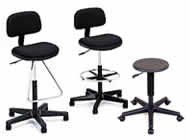
Chairs and Stools — Your back will thank you (or punish you). Alvin Prestige and Safco Vue offer real lumbar support at reasonable prices. Invest here.
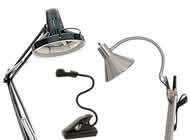
Studio Lighting — Daylight-balanced LEDs (5000K-6500K) for true color perception. Daylight Company and Alvin make the reliable standards.
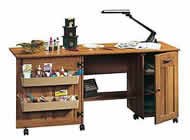
Studio Organizers — Flat files for large work, taborets for supplies, rolling carts for flexibility. Organization is workflow.
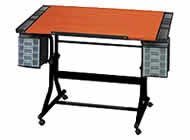
Drawing Tables — The foundation of your workspace. Alvin WorkMaster for durability, Mayline Vision for style, Studio Designs for budget entry.
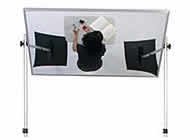
Teaching Mirrors — Overhead mirrors for demonstrations. Essential if you teach technique—students can actually see what your hands are doing.
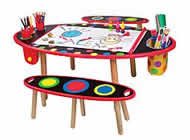
Kids' Furniture — Scaled for small bodies, built for abuse. Adjustable height, easy cleanup, safety features. Step2 and Melissa & Doug lead here.
Shop Furniture Supplies
Professional furniture supplies for every application
Field Sketch Boards
by Pacific Arc

3
Versions of this item
From: $6.18
Drawing Board With Parallel Bar
by Pacific Arc

6
Versions of this item
From: $88.77
Swing Arm Drafting Lamp
by Studio Designs

2
Versions of this item
From: $24.99
Incredible Art Board
by Grafix

2
Versions of this item
From: $21.96
Ultima Fold-Away Table/Tray
by Studio Designs

$175.68
Lamp D-Clamp for Swing Arm Drafting Lamps
by Studio Designs

$6.49
YoYo Magnifier
by Daylight

$31.98
Libra Table Lamp
by Daylight

$201.98


